

No True Scotsmen
The Tragedy of Sysmedicalism in Plural Communities

A lot of people only really know plurality from what they’ve seen on TV or film. They’re the mad, lost ones. Individuals with several persons trapped inside the same body, each fighting for control, each separated from the others by a boundary born of dissociation and suffering beyond the ken of most human beings. And invariably, inside every one of them lurks a monster that would threaten to devour the world should it ever be set free.
We are a very melodramatic species.
Hello, I am Ellis, and I am a plural. I’m not mad—unless I choose to be—and I’m not lost. My headmates and I work together, communicate frequently, and the most monstrous of us finds comfort in Second Wave feminism and red velvet pastries. She would devour the world if she could, but with nine billion other people to contend with, plus the rest of us, she’d find it difficult to begin her conquest of the planet without first being disarmed with hugs.
I also happen to be a mental health professional with a Master’s in clinical psychology, nine years of experience in the field, and a specialist in traumagenic dissociation and multiplicity specifically. Most of us traumagenic plurals never really come to a point where the medical community really understands us. The research and the empathy for multiplicity just isn’t there yet. I acquired all of the accomplishments listed above in order to understand myself.
And in understanding myself I acquired a deep and enduring respect for the community I’m now about to criticize. Know then, that this criticism is given with the fraternal love of a peer: neither authority nor preacher.
The Medical Model of Dissociation
Very few laymen really understand multiplicity, so we’ll begin with a short primer.
According to the Theory of Structural Dissociation of the Personality (TSDP), human beings are all born with an unintegrated personality that eventually integrates into a coherent whole. During development, trauma can interrupt this process, resulting in the structural dissociation of the individual into an Apparently Normal Part (ANP) and an Emotional Part (EP).1
The unintegrated personality of a pre-integrated infant is little more than a loose collection of different ego states that each address different physical or psychoemotional needs. One ego state may be entirely focused on feeding. Another may be entirely devoted to maintaining its attachment to its caregiver. As the infant enters into early childhood, these ego states begin to coalesce, and by ages six or nine, a child has developed what the plural community calls a singlet mind.
Notably, under TSDP, the only mechanism known for certain to interrupt natural process of ego state integration is extreme trauma. Trauma can be experienced by anyone, and unprocessed trauma is the primary cause of posttraumatic stress disorder (PTSD), but the sort of trauma that is believed to prevent a child’s ego states from integrating creates a reality for the child that they must come to believe only “someone else” could survive, so that only someone else must. The trauma experienced by a child with structural dissociation often involves experiences that can only be accurately classified as torture or sadistic abuse, not simply neglect or bad parenting.
Imagine you’re building a family home. It’d be nice if you could be permitted to build in peace and quiet stability. Instead, we’re going to ask you to build your house on a fault that never stops shaking. Sometimes the earthquakes aren’t so bad, but sometimes you wind up having to cling to the ground just to stop yourself from being thrust about by the force of the earth’s vibrations. You try to join the rooms together, but the walls keep shaking apart.
So you build the rooms separately. Micro homes, after all, are far more stable than any single, two-story Tudor cottage. You can shake the shit out of them, and they won’t fall apart nearly as easily. Give ‘em each different locks, and you can keep each one safe individually. You could even sacrifice a few to safeguard the rooms where you keep your most precious belongings.
As an evolutionary strategy, structural dissociation is a genius solution to a grisly problem, and it can result in some significant benefits (e.g., dissociation can sometimes prevent the body from remaining in fight-or-flight mode so often that it begins to experience the consequences of long-term, chronic stress, simply by reducing the amount of cortisol present in the body at any given time).
The Importance of Medical Models
TSDP was an incredible leap ahead in the science of multiplicity. We went practically from behaving as if Dissociative Identity Disorder (DID) were still just a strange form of demonic possession to a true, mental health problem that could be addressed scientifically and empirically. For traumagenic plurals who struggled with significant impairment and distress on account of their multiplicity, TSDP was a ray of hope in a whole scientific field of darkness.
That’s the beauty of medical models. They help explain concepts such as a disorder—an abnormal condition where the body or mind functions improperly, but may or may not have an identifiable cause—in order to treat a mental health problem of which we still don’t understand the cause. This is true of almost all mental health diagnoses, which deliberately end with the word ‘disorder’ for that very reason.
We health professionals may be disconnected at times, but we are meticulous when it comes to our naming conventions.
The Problem with the Layman’s Interpretation of Medical Models
All psychological medical models are the result of decades—if not centuries—of meticulous study and observation by exceptionally clever (if sometimes racist and sexist) people devoted to studying patterns and trying to make sense of the ways in which the human mind can go wrong.
This is a crucial point of understanding. Medical models tell us what we have seen in the context of dysfunction. Because they do not also give us a mechanism that would allow us to understand why a healthy human mind can “dysfunction,” then they can only tell us about what we have seen and nothing at all about what we have not.
Medical models are maps of illness, not maps of possibility. They tell us exactly what we have seen in the psychiatric clinic, but they are utterly blind to what exists outside of it.
It’s Just a Theory!
Lemme stop us all right here. In scientific inquiry, a theory is defined as “well-substantiated explanation of a natural phenomenon, rigorously tested and supported by substantial evidence.”2 And since we have no better theory of structural dissociation to offer the Zeitgeist, then we accept TSDP to be the gold standard for the development of structural dissociation in children who are currently, as they present in a clinic for diagnosis, experiencing significant impairment and distress in their daily lives on account of that structural dissociation.
Insofar as we keep our scope within the realm of dysfunctional structural dissociation, absolutely. TSDP is a complete and well-supported theory, and one that—until a better theory comes along—we will treat as fact.
If we were to expand our scope, however, TSDP no longer serves us quite as well. TSDP describes a dysfunctional set of ego states that cause a significant amount of impairment and distress (I keep repeating those two words; that’s not because I’m short a thesaurus!) to the person experiencing them. Were we to want to try and understand a plural system that claimed to be functional, well, that would require something of a paradigm shift.
One might have to consider if it could be possible for a consciousness to fail to integrate without trauma. TSDP can tell us a lot about the consciousness if there had been trauma. Without it? TSDP doesn’t say no. TSDP merely gives us a justified and unabashed shrug.
“I dunno, man. I’m friends with the crazy ones. Why, what you got?”
TSDP knows everything about the dude building their house on a fault line. It never really cared about the one who built all their micro homes in a valley meadow between two old, sturdy mountain ranges. It didn’t dislike the dude. It just thought the dude building on the fault line was way more interesting.
No one calls 911 when a house doesn’t collapse.
After all, TSDP was designed in a field that exists in the interstice between theory and practice. Its whole existence is predicated on its functional ability to reduce suffering among our fellow human beings. Where no suffering exists, the fields’ interest tends to be more hobby-like than passion-driven.
The Hard Problem of Consciousness
Coined by philosopher David Chalmers, the “Hard Problem” of consciousness describes the more difficult of the two empirical and philosophical mysteries that remain for us to discover in reference to the nature of consciousness itself.
The “Easy” Problem: How does the brain turn sensory input into process signals? How does the brain allow organisms to discriminate between different stimuli? The easy problem is a mechanical problem.
The Hard Problem: Why does signal processing “feel” like something? What is the origin of the subjective observer that experiences the redness of a rose or the sting of a needle? Why aren’t we just biological machines producing output from input with no moderating influence in between?
The question is currently at the forefront of psychology, neurology, philosophy, and a dozen other fields of inquiry. The Illusionists, represented by Daniel Dennett and Keith Frankish, argue that the Hard Problem isn’t real; there is no subjective observer, merely the fact of a biological machine weaving a fictional narrative thereof. The Panpsychists like Giulio Tononi and Philip Goff hold that consciousness is a fundamental property of the universe holistically, same as gravity or mass; consequently, any system that integrates information within this universe naturally acquires at least some non-zero degree of consciousness. The Mysterians believe that the human brain can never understand the Hard Problem, just as a dog brain can never understand calculus—no matter how hard it tries.
The reality is that the Hard Problem remains, to this day, an open question. We have so little going for us in terms of an answer to this question that most of the participants in this debate must rely on logical speculation to make sense of things we know less than nothing about.
What do I mean by less than nothing? We can’t even convince ourselves that a subjective self is empirically, ontologically real. If we cannot prove the ontological reality of a singlet mind, how do we even begin to prove the existence of a plural mind without trauma?
The Liar and the Storyteller
It is easy to assume that another person is wrong because we have never seen anyone like them. It has happened to every minority in human history since history began to be recorded on papyrus and stone. All of us have had our lived experiences invalidated at some point or another.
We talk about emergent systems in psychology all the time; these are functions, behaviors, responses, or qualia that emerge as a consequence of the interaction of other, simpler systems. Here’s an awful one that occurs at the intersection of theory of mind and fear of the unknown:
You are walking down a sidewalk in your city, and you see someone that looks like you coming down the street. That’s cool! You may not know that person, but they have your general skin tone, the gait of their walk is kinda like the one that person you like from work has, oh! and they even have the same piercings you do. Even better, they have a tee-shirt on indicating that they love the same music you do! This is a match made in heaven. Meeting this person would invariably result in a friendship that would put Aladdin and Robin Williams’ Genie’s to shame.
You meet them, shake hands, and you ask them how they’re doing, eager to get to know this very obvious spiritual cousin—this heretofore unknown member of your tribe.
The Anatomy of Connection
When we’re very young, we develop something called a “theory of mind.” This cognitive superpower allows us to understand that our thoughts—the words and images and concepts floating about inside our own heads—along with our beliefs, desires, and intentions are distinct from those of other human beings. It is the understanding that others are capable of having “minds” that are different from yours.
While a child quickly thereafter realizes that lying to one’s parents is not only possible, but sometimes even a little fun, the deep connection between a child and their parents results entirely from the ability that the child has to predict the behavior of their parents by accurately guessing at the content of their parents’ minds. A child that behaves well and is praised for it will develop a theory of mind that permits them to imagine themselves close to their parents. A child that behaves poorly and is punished for it may develop a strong bond too, but one that requires a certain amount of emotional compartmentalization. A child that behaves well and is punished, however, will learn quickly that the minds of others are unpredictable, and that makes those who have that kind of mind—the mind that we cannot predict the behavior of—objectively dangerous to us.
We approach the predictable mind that is similar to our own. We reject the unpredictable mind because we do not understand it, and for our existential safety, in a cruel world, we must assume that a mind that we cannot understand is a threat. Naturally, we pull away from it.
An Autopsy of Disconnection
And why wouldn’t we? We’re traumagenic. Every single individual who developed dysfunctional dissociation in childhood did so because they had to protect themselves against individuals in our lives who behaved with wild unpredictability. No matter what we did, we could never do anything right by them. No matter how loyal we were, or how loyal, or how submissive, our punishment for our good behavior was severe. We were not permitted to be safe, and our entire world was rendered wholly unpredictable, every mind that wasn’t ours completely and unabashedly monstrous.
The trust that one has to develop to eventually allow oneself to be vulnerable again with like minds is so great that many of us never rejoin the greater body of society, preferring instead to live in small countercultural communities and existing largely along the outskirts of a world we find aversive to live within. This is sometimes the safety required for healing. If enough harm has been done to a person, and their motivation to heal from that harm does not overwhelm their terror of it, then that is the safety required for living. Any less safety would result in a lifetime of numb survival, and there is no one in the world who deserves that, let alone someone who’s never experienced anything else and now just wants to be left alone.
Fear disconnects us from one another. Healing from fear is a choice one makes because one has somehow acquired the benefit of safety delivered by a support system of (at least presently) unconditionally accepting human beings. Without such a system in place, healing from fear is undesirable. After all, in the wild, fear performs a very important protective function. An abuse victim without fear is one that will likely die from that abuse; to survive from abuse, we must forge fear in order to defend our most precious selves against a person that has exceptional psychoemotional—if not straight-up physical—power over us.
Fear of unpredictable others isn’t our weakness or our flaw. It is our weapon and shield in a world that would have killed us had we remained unarmed.
Back to that Cool New Person You Just Met
They greet you with a firm shake of the hand, and they answer you with joy: “I’m having a wonderful day. I just killed my brother and consumed his essence, so I feel great! How are you?”
Naturally you’re horrified. How could anyone be so nonchalant about fratricide of all things? And then cannibalism on top of that?! You would be mad not to recognize this person instantly as a murderer, a cannibal, and a monster and react accordingly.
Unpredictable minds are dangerous. Unpredictable minds that say things the provenance of which you cannot even fathom must certainly feel that much more dangerous. And if you’d grown up with unpredictable monsters you could never understand too, you’d have a good reason to fear this person—someone you once thought was just like you…until they opened their mouth.
The Consequence of Unmanaged Fear
When I had just turned eighteen, I still hadn’t accepted that I was a plural. I’d had an imaginary friend and an evil twin by now, but I hadn’t been ready to see them for what they were. At nineteen, I was forced to confront my “evil twin,” who presented as a Jungian shadow but was just the alter who had been charged with helping me to survive my mother’s abuse with relative normalcy in tact. Eventually, we came to see each other as siblings.
My original self-state and my “evil twin” integrated when we were 23 years old. At the time we had been under the influence of both ecstasy and acid, and while the mental visualization that I experienced of that integration was quite different from a fratricide, I could easily imagine a situation where my mind might have constructed a battle between my original self and their evil twin. This mental battle may have resulted in the defeat of one or the other twin, and the victor may have devoured the the essence of the vanquished as a way of processing the integration experience.
And imagine if I had shared that personal and deeply intimate experience of personal growth with you so earnestly that I made you believe I was a cannibalistic person who would murder his own brother for the taste of man-thigh. Imagine if you feared, hated, or even attacked me because you believed—being a cannibalistic fratricide—that I would invariably endanger you or your loved ones.
I’d be terribly sad to die for a misunderstanding born of miscommunication; because we failed to understand the meaning of one another’s words. Because only one of us failed to ask any clarifying questions and just ran with the worst, first thing that popped into their head.
The tragedy isn’t just the loss of a connection here. It’s the corruption of the person who had once suffered into someone that creates suffering in order to protect themselves. The tragedy isn’t the loss of one traumagenic plural. It’s the loss of both.
No one ever wants to become the thing they’d learned to fear. There is no other name for the process whereby that occurs than “tragedy.”3
Murder and Cannibalism?! That Example Is Too Dramatic!
Is it?
The traumagenic plural community survived incredible trauma, psychoemotional torture, and sadistic pain. In a world that often invalidates our pain, we often learn to use dramatic language in order to put to words concepts so intense that the reason our complaints appear ingenuine is because language is incapable of describing the quale of our lived experience of suffering.
If I met you, and I believed you were a plural like me, I would think that you were safe to talk to about my plurality regardless of what form that plurality too. You remain predictable so long as you accept me, and thus you would be safe to talk to about anything at all. And a person with severe trauma who is also experiencing such intense safety will often overshare; it is the curse of experiencing connection when you’ve only had it as often as an orphan child who asks whether they can please have more slop has had access to nutritious food.4
A plural’s lived experience will require metaphor and hyperbolic language because much of that lived experience takes place within the inner world of our minds, thoughts, fears, and nightmares.
This example, if anything, is precisely as dramatic as it needs to be to make the point. If your reaction to a visceral narrative is disgust, you will always miss the truth beyond that fearful and dismissive reflex.
What Are You? (to Me)
Let’s change the person approaching you from a dramatized version of traumagenic, little-ol’ me to a functional plural. Maybe the person is a traumagenic as I am now—one of the many, many traumagenic individuals who used psychological tools, mindfulness, and visualization, to build a functional, coherent system out of the chaos nature spat out. Traumagenic individuals whom, after years of therapy and intimate, personal, psychoemotional engineering have become something that TSDP cannot even conceive of.
A plural that no longer requires the language of dysfunction and disease to explain their system’s existence and present structure.
Imagine that. A plural that does not need TSDP to define themselves. How would we define them, then? How could they define themselves?
Well, there’s no framework for that. Not really. The plural community has the same exact certainty the scientific community has at this point in history: imagination and speculation. But the plural community has something that the scientific community must always lack because while it is an awful source for empirical data (therefore not what scientific practice is after—and that’s fine cuz policing people was never what science was for anyway), it is the only source of wisdom and psychospiritual growth: lived experience.
So then, what’s the answer? To you, am I a liar or a storyteller? That’ll depend on how much you value the lived experience of an unknown stranger. For we traumagenics, our caregivers very much taught us that every unknown story is a lie. We know that we can trust our theory of mind—it has never (knowingly) lied to us. Other theory of minds? Fuck those minds. Our instinct is to call every narrative we can’t make sense of a lie because to do otherwise is terrifying.
But we know where that action leads because we experienced it ourselves. And the greatest benefit of lived experience? No matter how fucking shitty it is, we can learn and grow from it. The arrow of time is defined by entropy and moves ever forward so that, in any closed system, all change is a step towards chaos: waning, withering, and death. Only an open system that chooses to inject new energy into itself can turn an inevitable trek towards doom into nutriment for growth and positive transformation.
So how do we inject new energy into the closed system of a person’s mind?
We learn. We listen. We find ways to bring others in rather than reasons to keep others out. We welcome people who come to us with their lived experience in the form of narratives we cannot possibly make sense of because none of our narratives make any sense without the context of our own experience to put form to formless water. Because without even the attempt to understand a person unlike ourselves, how can we ever become anything more than fearful tribes living in isolation, terror, and darkness?
How can we ever be a society that understands and accepts plurals if we never even bother to understand those of us that aren’t so easily defined by models such as the TSDP? I think our failure to accept the incomprehensible can only serve as evidence that plurality generally will never be accepted within the mainstream. If even we cannot imagine something other than us, how much less can we expect from singlets, who experience even slimmer variation among one another’s psychological architecture?
If the idea that plurals will never be accepted in mainstream society sounds utterly unacceptable to you, keep reading. If you’re cool with how things are, feel free to disembark at this port. We’re gonna be moving on without you.
The Healing Power of Storytelling
In A Man’s Search for Meaning, Victor Frankl discusses a form of therapy he created to treat Holocaust survivors: logotherapy. Frankl found great success treating the severe post-traumatic stress disorder (PTSD) of his most suffering peers among the Jewish community by teaching them how to build empowering narratives around their suffering. By allowing his patients to build meaning around the worst things that humanity has ever experienced, they were able to heal even from those.
That’s the power of storytelling. We’ve been healing one another in this way since we first put meaning to the utterings we’d learned to make with our lips, breath, and mouth. And that’s one reason why TSDP works so well for those of us who did begin our journeys as dysfunctional plurals.
TSDP tells the story of traumagenic dissociation in a way that allows those of us suffering from the consequences of that trauma and related dissociation to feel seen.
While it may feel, in the context of our fear of re-experiencing our worst moments, that the existence of plurals outside the TSDP model would prove TSDP to be wrong and may therefore feel invalidating to traumagenic plurals, this is a feeling and not a fact.
We who have experienced trauma and begun the process of healing from it have come to understand the importance of giving ourselves radical honesty—about what happened to us, about what we did before, about what we did after, about anyone we hurt trying to protect ourselves, about whether or not they truly deserved it, or about whether instead we’d taken a step closer to becoming what made us. We have to do this because to heal is to leave that shit behind, and you can’t ever leave behind you what you’re actively throwing in front of yourself to keep hypothetical threats away with the stink of it. We can never heal without clarity about our selves (however many there may be within us).
So we begin by admitting our fear and naming it. Once we’ve done that, we can reject it in favor of the traits our torturers most despised: inclusion, acceptance, and communication. We can then spend more time asking endogenic plurals about who they are and how they made it here, and less demanding that they iatrogenically confabulate traumatic events to sate our need to have all our peers suffer as we did.
That’s not hyperbole. Iatrogenic trauma caused by false memory retrieval can have very serious consequences and may even lead to maiming and death caused by suicide attempts or completions. Because that’s what many endogenics do to feel accepted by some sysmedical plural communities. And in her seminal “The formation of false memories,” Elizabeth Loftus empirically demonstrated how quickly false memories can be implanted in a person.5 This process is sped up by orders of magnitude when social deprivation (as I described in the previous paragraph) hits the nitrous oxide on that traumagenic engine.
Would it be too simplistic to say that any system that creates perverse incentives is a system that ought to be disrupted? I don’t think so. And there is no worse perverse incentive than, “I have to hurt myself very badly so that these people, the only ones even potentially capable of understanding me, will finally accept me into their special club.”
If you’ve ever told an endogenic plural that they aren’t real or valid because you thought they were lying or pretending to be something they weren’t for whatever reason you might invent for someone choosing to behave in that way, then you have likely created this feeling in another human being who trusted you just long enough to tell you something they’ve likely told very few people—you’ve probably already notice they don’t have that many friends, just one or two very close ones if any.
I would very much like you to ask yourself if it was worth it to make someone feel like that for any reason, let alone your hypothetical safety from a hypothetical threat that has historically never been a threat at all.
The Circular Firing Line
In Sarah Schulman’s 2016 book Conflict Is Not Abuse, she introduces the concept of a Circular Firing Line.6 It’s an interesting little thought experiment:
We have a plural community. The plural community puts a rule in place: “No endos!” New people arrive in the community all the time, wondering whether or not they’re plural. Since most newly minted plurals don’t come out of the womb with full training of the jargon we use within our community, many plurals who have not already sought out medical treatment and learned the language of dysfunctional dissociation will describe their plurality in strange and sometimes confusing ways. The rule “No endos!” results in many new folks being harassed and challenged for their inability to properly use historically common plural vocabulary words or to know concepts they’ve never been exposed to prior to ever having been exposed to them.
I have not known many endogenics that have also claimed to be precognitive or psychic, so I suspect this is an unfair expectation to use as measurement for their authenticity.
The Circular Firing Line is not unlike the ouroboros in this way. In this context, the plural community begins to take out other plurals with cruel efficiency they expend long before they even get the chance to challenge its true oppressors: erasure and dehumanization.
Endogenics bring none of these problems with them. In fact, their numbers bring visibility and their diversity humanizes us. It’s the traumagenics among us, the members firing inward at other potential members of our community, that are slowly destroying us. The ones who think anything outside their norm is unacceptable and wrong…exactly as the singlet majority thinks of us.
Recreating the Self (on Purpose)
As more plurals with diverse narratives enter the social square, we’ll get more and more idiosyncratic stories of people with minds and lives that we will find completely alien to our own. The presence of diversity within our community is no more a threat than our own existence is, which is the lesson we hope to teach the singlet mainstream.
If we truly wished to normalize plurality, what better way than to let other expressions of it, particularly functional and modelable ones, exist and thrive? If we want to ensure we get the help that we need, what better way than to ensure the public sees the cause of dysfunction within structural dissociation truly is.
Every plural knows it because we feel its truth within ourselves every single day.
Our dissociation is not our dysfunction. Our trauma is our dysfunction. Our dissociation is the Jaws of Life we built to free ourselves from it.
Even the psychological and scientific communities are inching their way towards a public health model that is inclusive of healthy forms of traumagenic multiplicity post-treatment without the requirement that all alters fuse to create a singlet in order to achieve a complete state of mental health.
And if it’s true that dissociation is our coping skill and not a dysfunction in its own right, then why couldn’t it be used by someone without trauma? Singlets recreate themselves all the time for any reason whatsoever. The image below this sentence is literally a symbolic name some Artist Formerly Known as Prince took on to reinvent himself.
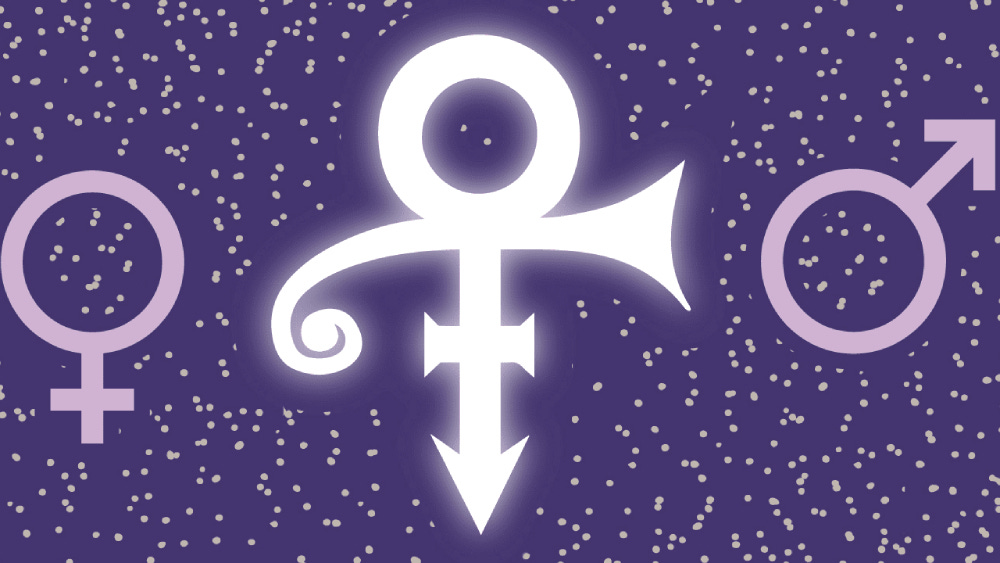
This isn’t a uniquely plural thing, and a name change like this isn’t like changing clothes; it represents a paradigm shift in one’s view of oneself. For Prince (formerly), it was a way of re-inventing himself, free of from the corrupting influence of his former publisher.
If a singlet consciousness can restructure itself at any time (it can), and multiplicity is one structure that the mind can take (it is), then it follows without much heavy lifting that a consciousness of any kind could restructure itself, on purpose, to become plural. And if that’s so, then it’s possible a mind could restructure itself into quite a great many more things. And understanding the chaotic nature of our world as well as any traumagenic plural does, why in the world would we deny them that tool which saved us?
It’s probable that the possibilities for what the shape the consciousness can take are infinite. How selfish and foolish would we be to deny consciousness itself—and any person that shares one with us—this freedom to become?
Van der Hart, O., Nijenhuis, E. R. S., & Steele, K. (2006). The haunted self: Structural dissociation and the treatment of chronic traumatization. W. W. Norton & Company.
Scientific theory. (2025, November 26). In Wikipedia.
In classical tragedy, according to Aristotle, the hero’s downfall is often caused by their attempt to avoid a fate (fear), which inadvertently brings that fate about. It is a consequence experienced by transmedicalists in the present day, and sysmedicalists likely not very long from now. The time to get off that derailing train is now.
Oliver & Company received very little validation unless they made it for themselves, as Dodger did when he sang “Why Should I Worry?” while dancing on strings of sausages.
Loftus, E. F., & Pickrell, J. E. (1995). The formation of false memories. Psychiatric Annals, 25(12), 720–725. https://doi.org/10.3928/00485713-19951201-07
Schulman, S. (2016). Conflict is not abuse: Overstating harm, community responsibility, and the duty of repair. Arsenal Pulp Press.